Medieval
Celestial Messenger
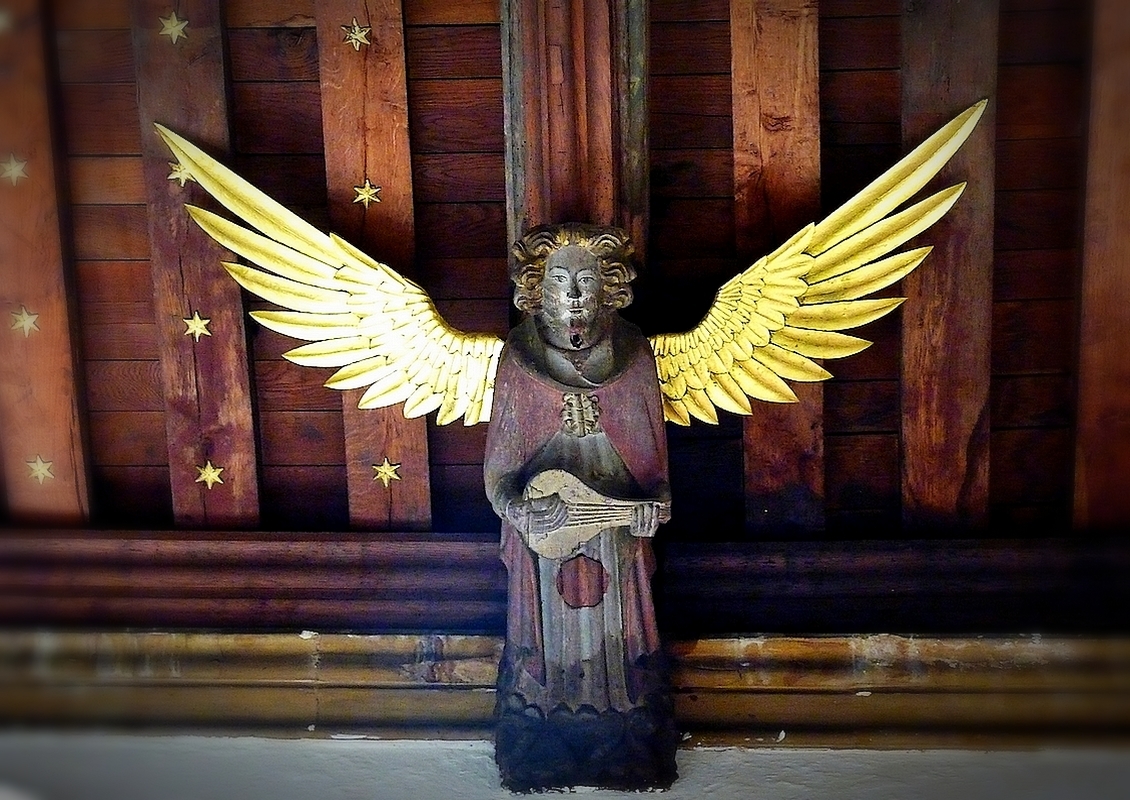
To the south of the Chancel in St. Mary’s Church in Hitchin, is the Guild Chapel and its ceiling has beautifully carved wooden medieval Angels: Some with gold leaf on their wings, others without. This might have been due to prohibitive cost, so the rest couldn’t be done or their gold leaf has fallen away. For whatever reason, they are still beautiful to look at. It is worth noting that each Angel has a different symbol associated with it. This one has a lute, others have a harp or viol, keys or shields or symbols of the guild who funded their making.
To the north of the Chancel is the Trinity Chapel, and it too has Angels on its ceiling. These seem to be of a different style and none have the gilded wings that the others have in the Guild Chapel. However, they are still beautiful and full of character, with individual hairstyles and worth taking note of. So the next time you are in St. Mary’s Church, Look up!
Hitchin Priory Hall
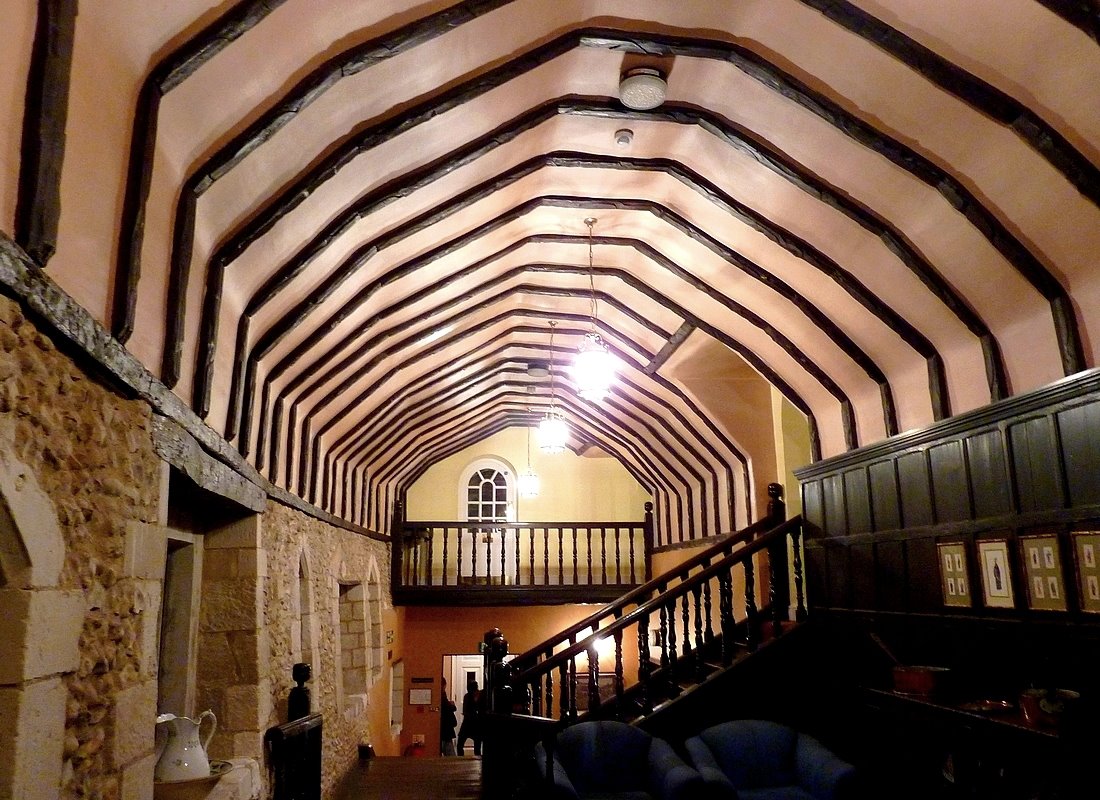
This is the big hall that sits above the west part of the cloisters in The Priory in Hitchin – Confusingly ‘The Priory’ was really a Carmelite Friary founded in 1317 and was renamed to ‘The Priory’ when the house was added on to the Friary at a much later date. What we now know as ‘The Biggin’, used to be Hitchin’s Gilbertine ‘Priory of Newbiggin’ founded in 1361.
St. Mary’s Church
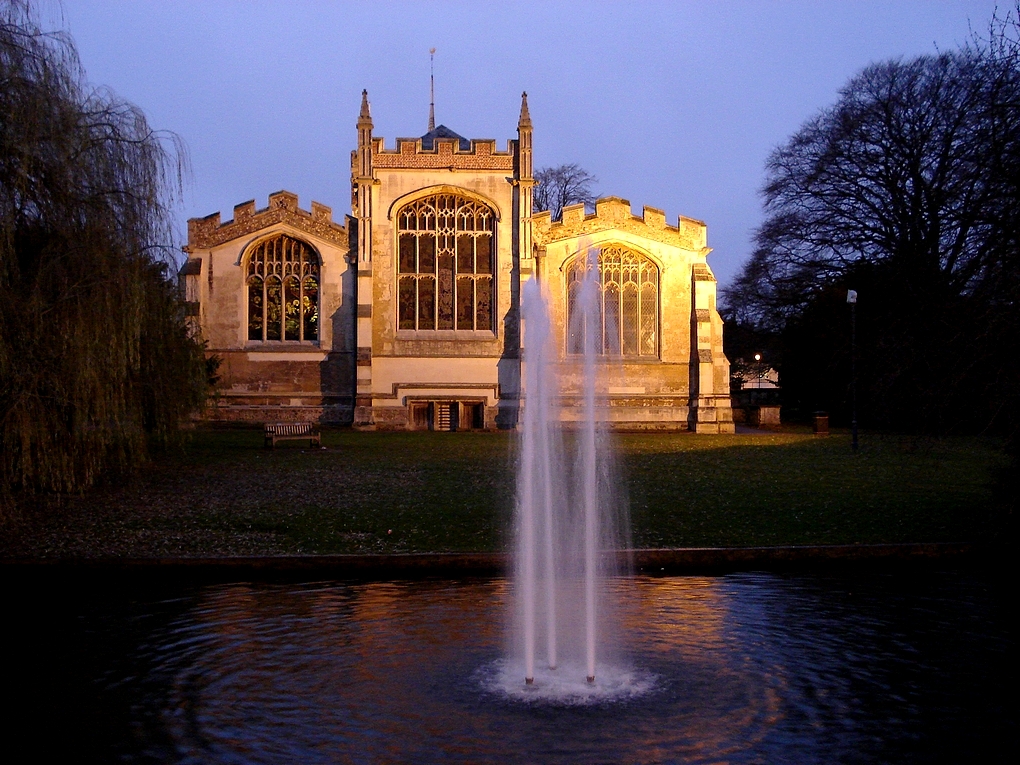
The iconic view of Hitchin is of this one above; The great eastern window of the chancel of the Church of St. Mary’s built in c1450. When the High Altar was moved against the wall of the chancel in the 19th century, 4 feet of the great eastern window was lost. Imagine just how much more impressive this perpendicular style stainded glass window would have been with that extra length added!
The Archaeology of Hitchin
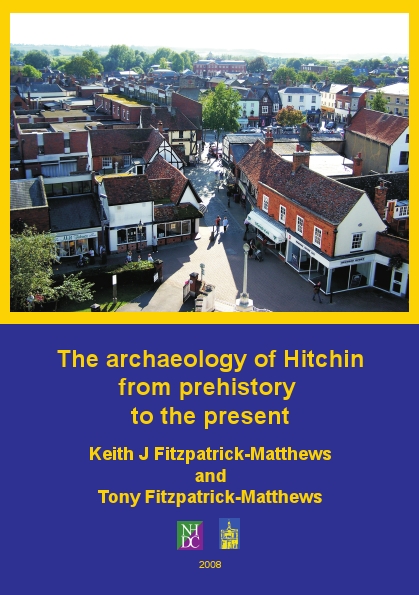
On the 10th of May 2008, a book about the archaeology of Hitchin is being released and there will be a launch on the lawn in front of the Hitchin Museum at 12.00pm (courtesy of The Hitchin Historical Society). It’s a ‘must have’ book about Hitchin and is somewhat of a ‘bodice ripper’ when it comes to archaeology. The authors will be signing copies of the book (they don’t bite) beforehand and will be giving a brief talk about it.
Hitchin Iconoclasts

The beautiful south door of St Mary’s Church in Hitchin shows just how the Iconoclasts did a ‘good’ job and destroyed nine statues that stood in the niches that are part of the doorway. However, they did not get the three figures at the very top. Presumably because they couldn’t be pulled down or chiseled out. Just how much more imposing and beautiful would churches have been with all their statuary around and inside them; including the brightly painted walls with scenes of the saints and from the bible.
Putlog Holes
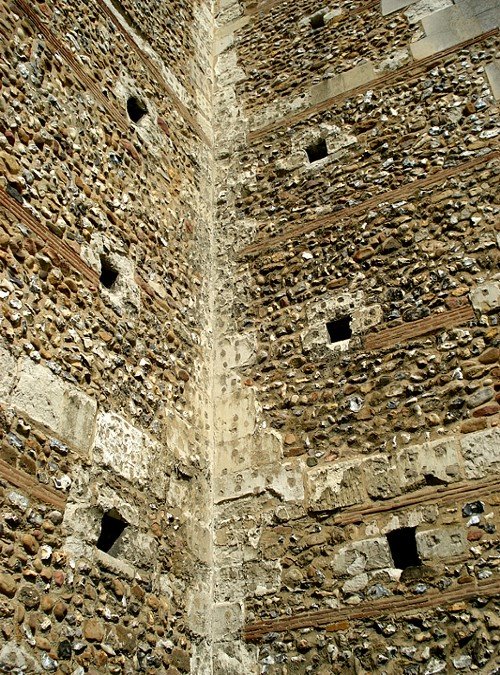
God or the Clergy didn’t build Churches, rather, Masons did and evidence of the builders of St Mary’s Church in Hitchin are everywhere inside and out. The major detectable traces are ‘Masonry Marks’ on the stone and the scaffolding holes called Putlog Holes. If freestanding scaffolding like today wasn’t used, then the usual ‘Cantilevered Scaffolding’ (Or more commonly known as Falsework) was used. These Putlog Holes above, were where the scaffolding planking passed through the entire width of the wall. (As walls were erected inside and out at the same time, unlike today). When the work was finished, the planking was either pulled out or sawn off, flush to the wall.
Market Place
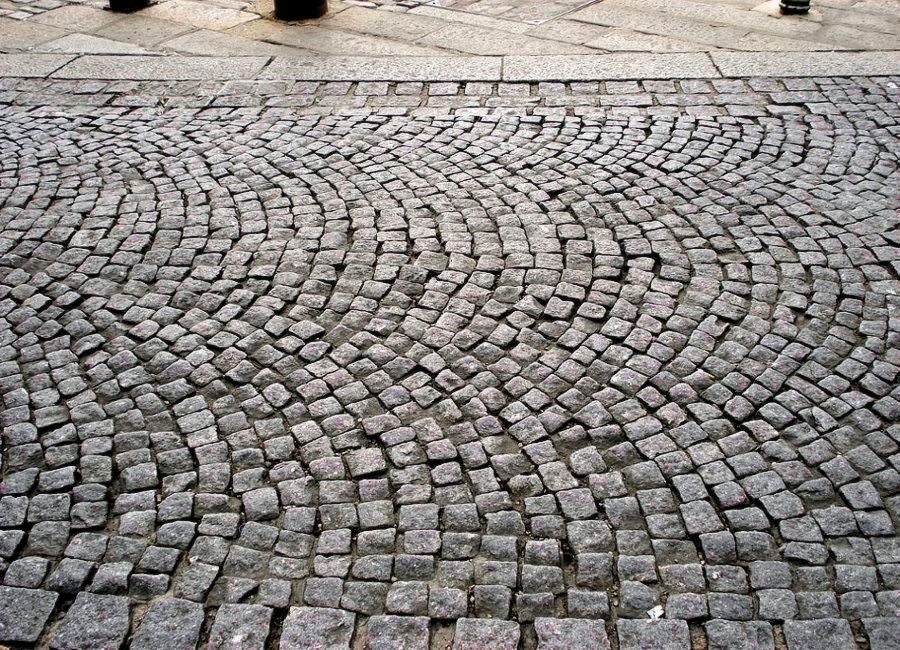
I like this pattern created in the cobblestones of the road that encircles the Market Square (Called ‘Market Place‘)in the centre of Hitchin. It lends it a medieval look. The texture created by the interplay of light and shade and depth is nice. The sound of the cars driving over them is enjoyable too. In short, the whole ‘Experience’ of this unintentional ‘Installation‘ is pleasurable. A ‘Must-See’ for all art enthusiasts.